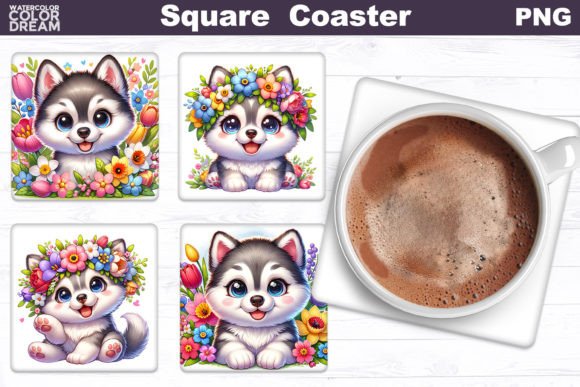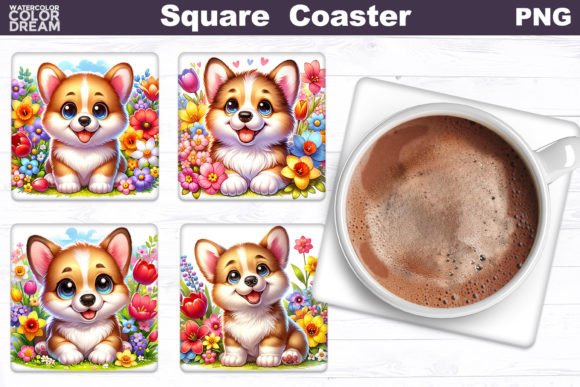
Collie Square Coaster Dog Flowers Squa: A Designer’s Take
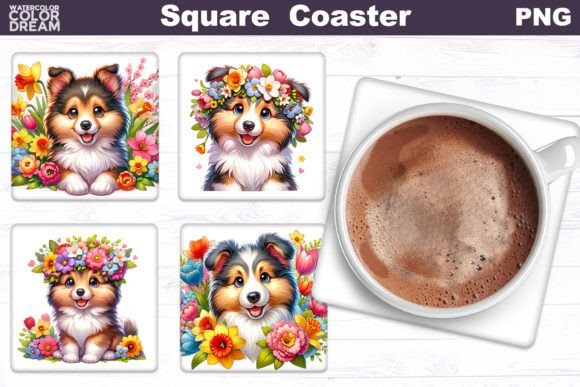
When I first opened Collie Square Coaster Dog Flowers Squa, I was immediately drawn to the quiet charm of the composition. This is not a loud, trend-chasing graphic. It feels thoughtful—the kind of design that rewards a second look. The square format gives it a stable, grounded presence, and the pairing of a collie with floral elements creates a mood that is both pastoral and refined. For anyone running a small shop or building a cohesive product line, first impressions matter, and this one lands well.
Let me be clear about what this file is, because the product description states directly: this is not an SVG file and cannot be converted into that format. The image is intended for direct print or sublimation application. It is not transparent. That means you are working with a raster graphic, not a vector embroidery file. If you are an embroidery designer or an apparel decorator, you will need to treat this as a design asset for print-based projects or as a reference for creating an original embroidery interpretation. Do not expect to load this into your digitizing software as a clean vector. Instead, use it as a visual guide or as a print element in a mixed-media piece that also includes stitched details.
What This Design Brings to Real Projects
The square coaster format naturally suggests products that are small, repeatable, and giftable. I immediately thought of custom tote bags, where the design could be sublimated onto fabric and then framed with an embroidered border or a simple satin stitch accent. The collie motif carries a sense of loyalty and warmth, making it a strong candidate for personalized gifts aimed at dog lovers. The flowers soften the composition, so the design does not feel stiff or purely literal. It has an illustrative quality that works well on sweatshirt embroidery if you choose to digitize a simplified version of the motif.
For a real-case scenario, imagine a customer walks into your shop asking for a custom embroidered tote bag featuring their collie. You can use Collie Square Coaster Dog Flowers Squa as your starting reference. Sublimate the floral background onto the bag fabric, then embroider the collie outline or key details using a fill stitch or running stitch. The result is a layered, high-value product that feels exclusive. You can sell it at a premium because it combines two techniques—print and stitch—in one finished piece.
Mood and Visual Personality
The mood here is gentle, nostalgic, and slightly romantic. The collie is depicted with a calm expression, and the flowers are arranged in a way that suggests a garden rather than a wild meadow. This makes the design suitable for baby embroidery projects, nursery decor, and holiday gifts where you want something heartfelt but not overly sentimental. The square crop gives it a modern edge—it is not a generic oval or circle. That square boundary can be incorporated into your product design as a natural frame, especially on pillow covers, tea towels, or blankets.
From a branding standpoint, this design communicates care and attention. If you are an Etsy seller or a small shop product creator, using this aesthetic signals to buyers that you curate your design assets thoughtfully. It is not a mass-market clip art piece. It has a hand-drawn feeling that supports the handmade narrative of your business.
Performance Across Different Product Types
I tested this design conceptually across several common embroidery project formats, keeping in mind that the actual file is for print or sublimation. Here is how it performs in different contexts:
- Custom apparel: On a sweatshirt or t-shirt, sublimating the full square creates a bold statement. The collie and flowers hold their detail well at moderate sizes. I would not shrink this below about four inches square, because the floral elements could lose definition. On a cap, the square shape is tricky—you may need to crop it or use only the collie portion for a curved surface.
- Patches: If you are creating embroidered patches, use the design as a visual reference. Digitize a simplified version with clear stitch paths, especially for the dog’s face and the flower petals. The square border of the patch can mirror the original composition.
- Home goods: For aprons, kitchen towels, and pillow covers, the square format is ideal. It centers naturally on a pocket or a panel. The floral elements add a feminine touch that balances the collie’s more masculine or sturdy presence.
- Baby items: On a baby onesie or receiving blanket, the design needs to be scaled down carefully. I would test it at about three inches to ensure the collie’s expression and the flower shapes remain readable. Use soft thread colors to match the gentle mood.
- Holiday and wedding gifts: This works beautifully as a personalized gift for a dog-loving couple or as a memorial piece for a beloved pet. The floral accents make it appropriate for spring and summer weddings, while the collie motif keeps it from being too generic.
Where You Need to Be Careful
No design is perfect for every application, and Collie Square Coaster Dog Flowers Squa has a few limitations you should know before you commit time and materials.
- Small hoop sizes: If your hoop is under 4x4 inches, the full square will feel cramped. The flowers especially need breathing room. Consider using only the collie portion in a small hoop.
- Textured or stretchy fabric: The design relies on clean, readable shapes. On heavily textured fabrics like fleece or boucle, the floral details may get lost. On stretchy knits, the square shape can distort. Use a firm stabilizer and test on a scrap first.
- Dark fabric: Since the file is not transparent, you cannot easily isolate the design elements. If you sublimate onto dark fabric, the colors will shift and may appear muddy. Light or white base fabrics give the best results for the floral palette.
- Curved surfaces like caps: The square composition fights against the curve of a cap. You will need to adapt the layout or choose only the central motif. This is not a one-size-fits-all design for headwear.
- Dense stitch areas in embroidery adaptations: If you digitize this for embroidery, watch for stitch density issues in the flower centers and the collie’s fur. Too many stitches in a small area can cause puckering. Plan your fill stitch and satin stitch transitions carefully.
Practical Designer Notes for Real Use
Over the years, I have learned that the difference between a good finished product and a frustrating one often comes down to a few simple checks before you start. Here is what I recommend for anyone using Collie Square Coaster Dog Flowers Squa in a real project:
- Test on scrap fabric first. Sublimate or print a sample, then audition it against your chosen fabric. Check color saturation, detail retention, and how the square sits on the product.
- Review thread color contrast. If you plan to add embroidery over the print, choose thread colors that either complement or subtly contrast with the sublimated palette. Avoid colors that blend in completely.
- Check stitch density before production. If you digitize an embroidery version, run a test stitch-out. Adjust the density for the fabric type. Use a running stitch for fine details and satin stitch for solid areas like the collie’s nose or the flower centers.
- Confirm hoop size. Measure your hoop against the intended placement. Leave at least half an inch of margin for fabric movement and hooping tension.
- Inspect small details. The collie’s eyes and the smallest flower petals are the first things to blur at small sizes. If those details matter to your customer, keep the design size generous.
- Test in black and white mockups. Convert the design to grayscale and see if the composition still reads clearly. If it falls apart in grayscale, the contrast in your final product may be weak.
- Compare light and dark fabric backgrounds. The same design looks drastically different on white versus navy. Sublimate a test on both to see how the floral colors shift.
- Use proper stabilizer. For combined print-and-embroidery projects, a cutaway stabilizer is usually best. It prevents the stitched areas from distorting the printed design underneath.
- Check licensing before selling. The product listing does not specify commercial-use terms. If you plan to sell finished items or digital products featuring this design, confirm the licensing with the seller. Do not assume it is automatically allowed for commercial use.
How This Design Affects Product Value and Customer Trust
In my experience, customers respond to designs that feel intentional. Collie Square Coaster Dog Flowers Squa has that quality. When you present a finished product made from this design—whether it is a sublimated tote bag with embroidered accents or a printed coaster set—the buyer sees coherence. The square format is unusual enough to stand out on a shelf of round or rectangle coasters, but not so unusual that it feels gimmicky. That balance is hard to achieve, and this design handles it well.
For craft business owners and creative entrepreneurs, using a design that reads as thoughtful rather than generic helps build brand consistency. If your shop specializes in dog-themed handmade products, this piece gives you a versatile option that works across crafts and graphics categories. You can use it as a printable mockup for listing photos, then produce the actual item using the same artwork. That consistency builds trust with repeat buyers.
Final Thoughts on Using This Design
Collie Square Coaster Dog Flowers Squa is a solid design asset for anyone who works in print or sublimation and wants to offer dog-related products with a refined, floral edge. It is not an embroidery file out of the box, but with thoughtful adaptation—either as a print base for mixed-media stitching or as a reference for original digitizing—it can become the centerpiece of several strong product lines.
My advice is to start with one product category, test it thoroughly, and then expand. Use it on a tote bag design first, because the square format sits naturally there. Gauge customer response before moving to apparel or home goods. And always, always test your materials before going into production. The difference between a product that sells and one that sits on a shelf is often in the preparation.